Five reflections from making a film.
Lives don’t unfold in a linear way
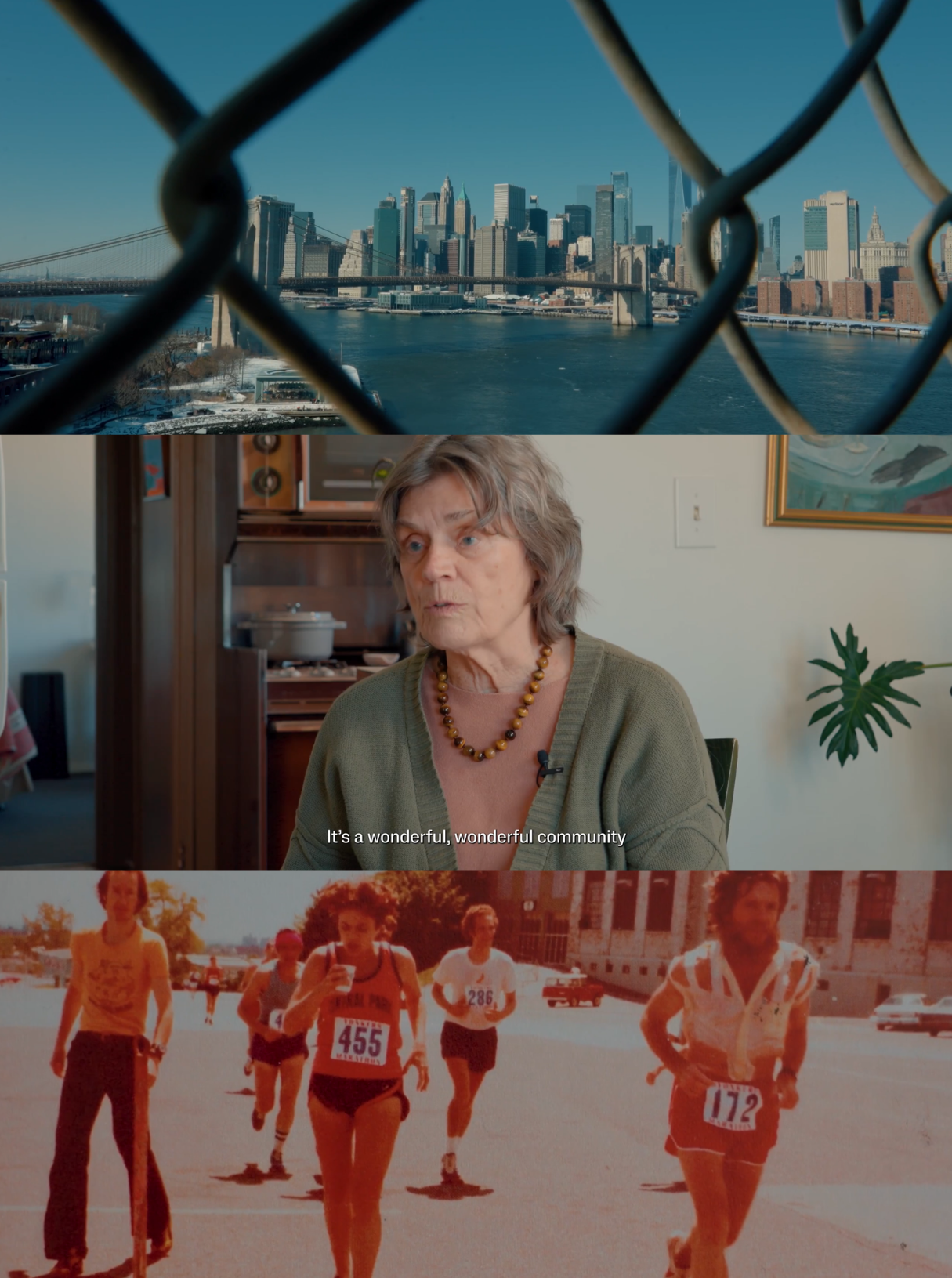
Working with Lynn and unpacking her story with the team, I realised this quickly. From when she sat down in protest at the start line of the 1972 New York Marathon to meeting her husband and began a love story with both him and the ritual of running, the key catalytic events of Lynn's life weren't neatly ordered. They bled into one another. Combined with her reflections on running today, they left us with a constellation of cannon moments rather than a linear timeline.
Rearranging it. Restructuring it. Playing with the arc meant creating a concentrated eight-minute edit of a life spent running, loving and advocating. Before flying out to New York, I thought Lynn's story was one of defiance and bravery: female runners petitioning for equal rights to compete at a time when women in sport were, at best, discouraged. As the process unfolded, it became equally a story about her relationship with David and the camaraderie of friends and partners who run together.
Working this way, where arrangement is entirely subjective, taught me to trust both my intuition and my sentimental nature. It changed how I see storytelling, making me realise filmmaking is an act of curation in much the same way an exhibition or even a conversation is. You make hundreds of micro-decisions about what to keep, what to leave out, and the order in which those fragments appear. That sequence can either juxtapose or reaffirm a central idea. Meaning comes from arrangement.
I remember at breakfast Lynn describing how, when she first ran out of her apartment in shorts, the whole street watched her. People shouted and called her names. "I thought it was so silly" she said over the brim of her mug.
Beauty can communicate character
A documentary can be shot with the style and sensibility of a fashion film. We felt strongly about that from the earliest pitching stages. Documentaries can be beautiful. You can brief an aesthetic language and visual references in exactly the same way you would for a campaign.
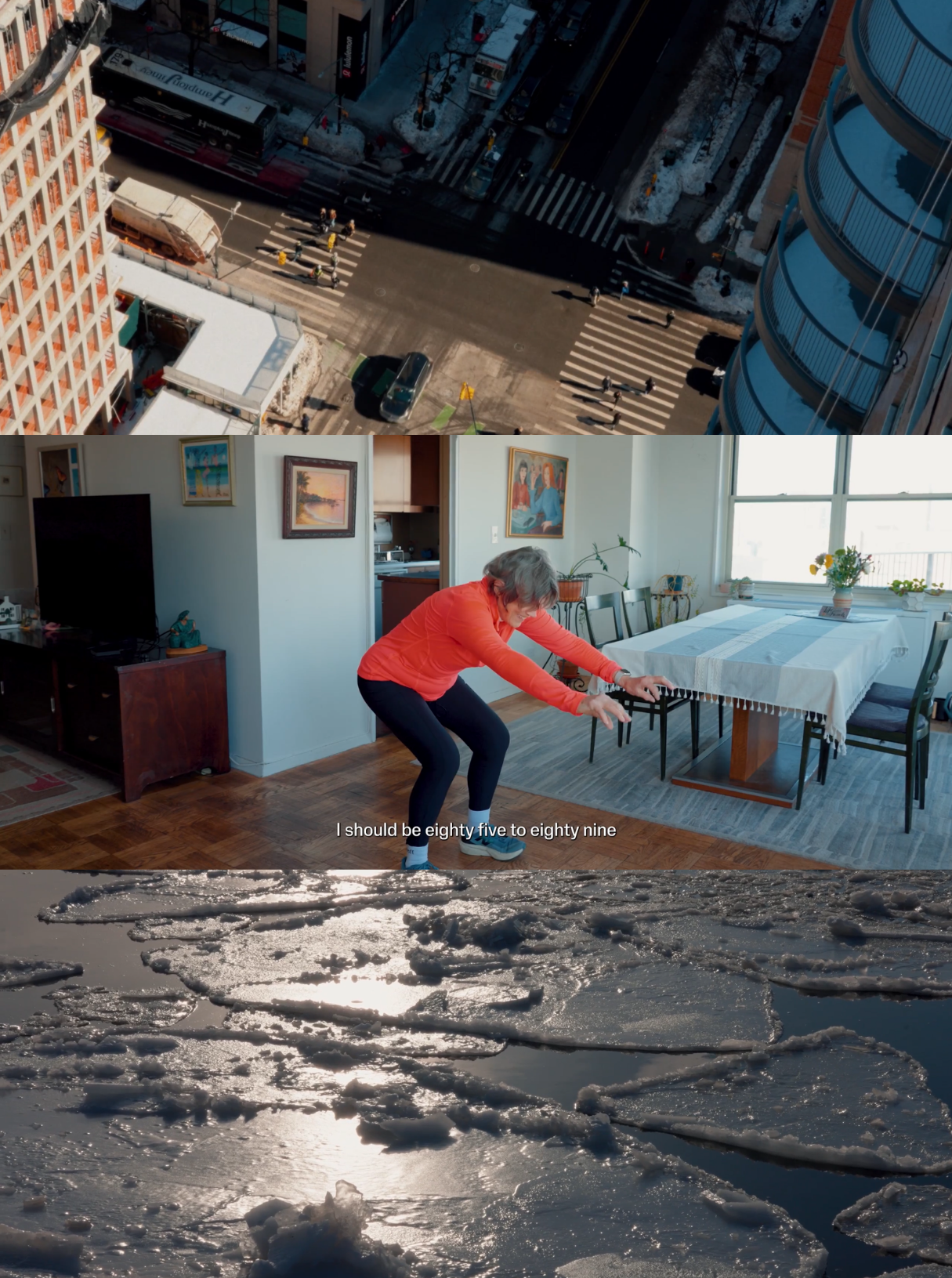
The negative space. The crisp white glow of New York in a deep January freeze. The blocks of colour surrounding Lynn, echoed in her clothing and the artwork throughout her home.
Lynn had such a lightness and youthful vitality that it only felt right for the film to shine as brightly as she did in person.
Image as narration
Looking back, I realise beauty mattered because it communicated things a narrator, or one of Lynn's friends or family, might have expressed had they been there to offer another perspective.
Lynn recounted her life with the humility so many women do, often downplaying some of the most remarkable things about herself. That's why the film needed to be beautiful: to show that her warmth reaches you whether she recognises it or not, and to reveal how resilient and how remarkably contemporary her thinking was, and still is.
The image becomes the narrator.
The film needed to feel polished, airy and graceful. It stopped the project feeling like a historical artefact and instead made it feel like an active contribution to today's conversations around running culture.
Stories emerge in the time you're not filming
Many of the best moments in Lynn's story happened off camera. We'd scribble them down before asking her to repeat or retell them once the microphones were back on. It reminded me that listening is just as important as filming. You have to be patient, and leave space for your subject even after you've packed the camera away.
I remember Lynn making us tea in her seventies teak kitchen when she casually mentioned that the men standing behind the women in the famous Six Who Sat photograph weren't the runners whose race they were disrupting. They were partners, brothers and friends—fellow runners who had come to support the protest. In fact, it was a man who first suggested the women take a stand.
That single detail reshaped the film. It became a story about allyship and the way runners often see themselves as runners before anything else. The project became less about gender and more about optimism. I'm glad I stayed open to Lynn quietly rerouting the story in her own way. It shifted the focus towards the support within running communities, and the care and respect runners have for one another.
Don't leave without a down-the-lens shot
Once you've captured everything you came for, ask your subject to look directly down the lens and smile.
It's such a simple thing, but that shot can carry enormous emotional weight. It often becomes one of the most valuable moments in the edit—and in the promotional material afterwards.
We were standing in Central Park beside the Women's Rights Pioneers Monument, which felt especially fitting, when Emma captured the most beautiful image of Lynn beaming into the camera. Her eyes were alive. Her skin glowed in the cold.
Watching it back, you can't help but smile. The Lynn effect is real. Her bravery and buoyancy really are infectious.
Sometimes you don't realise what an edit needs until you're inside it
Six Who Sat distilled the bright, brilliant life of Lynn Blackstone into eight minutes, told entirely in her own words. For every sentence or observation Lynn shared, we had three, four or five cutaways: light dancing on water, locked-off city streets, or quiet glimpses of Lynn running her familiar route through Central Park.
Sparrows. Steam rising. Someone tying a shoelace. Running water. A busy bagel shop on the corner of Lynn's street. A portrait of her and David at the beach. A doll's house. A school bus.
I learned to see B-roll as more than visual filler. It's where a film breathes.
And however much B-roll you think you'll need, triple it.
That ended up being one of my favourite parts of the whole project: wandering through the city, finding the moments before the moments, and discovering the details that quietly brought Lynn's world to life.